You are probably wondering why this blog has been so quiet for the past two months. Here is why! After Claire, Rubin, Akhona, and Jason, together with Johan and Luke collected the over 500 survey responses, we need time to analyse the data to make sure that what is later reported is accurate. With that many responses, this process takes time and we are still working on it. But in the meantime we have also had the opportunity to share updates and experiences from setting up this kind of project with colleagues internationally.
First, in May 2023, Kinga attended the HELSUS Sustainability Science Days in Helsinki, Finland. She was invited to present findings from her MSc project, completed in 2022 and currently in review for publication in the journal People and Nature. This was part of a session about sustainable ways of living with non-human beings, and attracted a lot of attention and curious questions about Cape Town’s baboons. The session was also an excellent opportunity to exchange knowledge and experiences with researchers working with different wildlife in urban contexts, such as barnacle geese in Finland and bovids in Hong Kong.

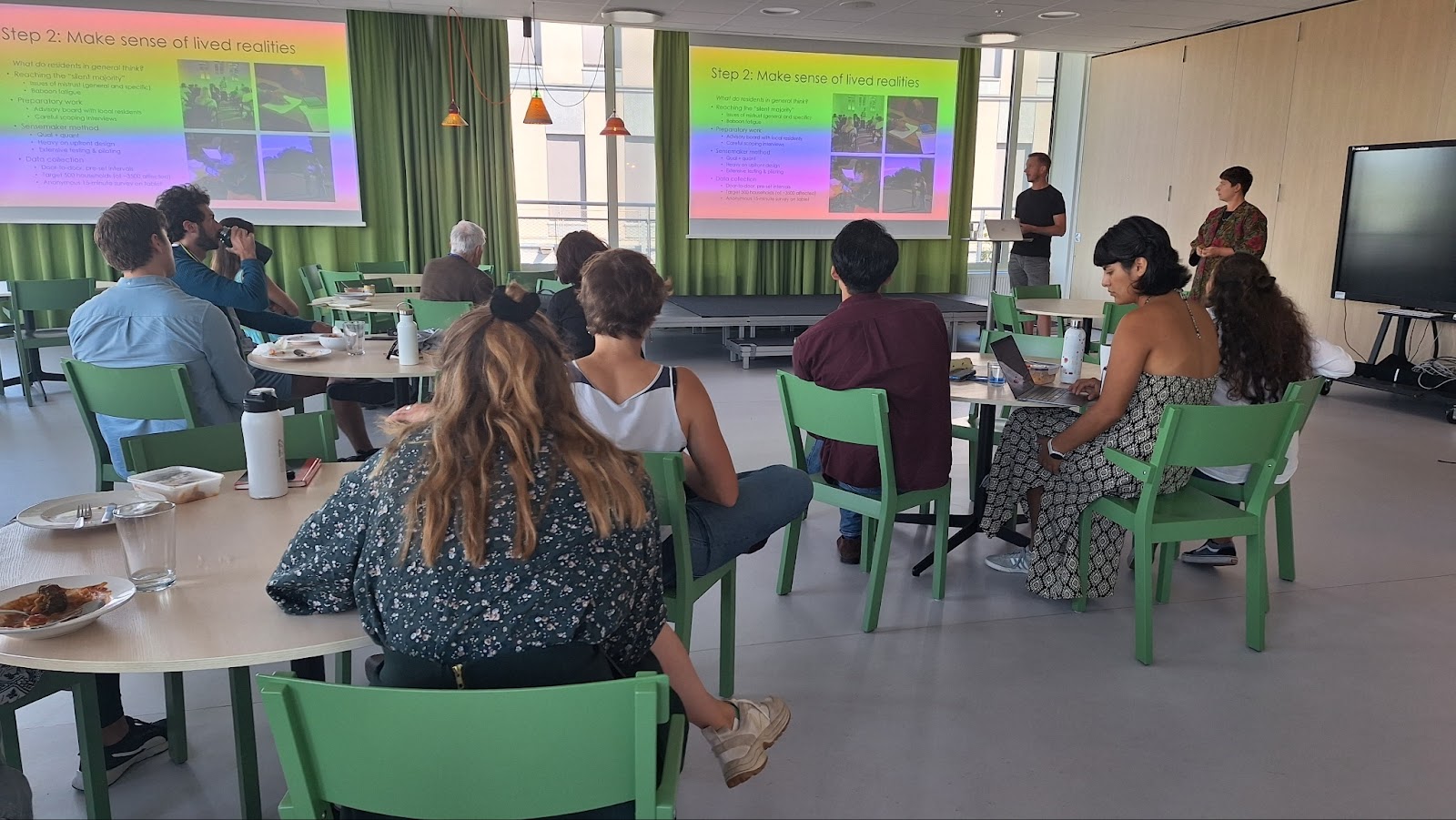
In August a rare thing happened: Johan and Kinga were both in Sweden at the same time, spending some time at our home institution, the Stockholm Resilience Centre at Stockholm University. We took the opportunity to give sustainability science colleagues and students an update about the Unruly Natures project, the work leading up to the recent survey, and future plans. Several interesting questions were raised during the discussion, ranging from methodological about the data collection, to more pragmatic ones such as navigating research on polarised topics in a South African context, and ontological ones around subjectivity and objectivity in science. This type of academic exchange is really valuable to help us reflect on the project’s aims and objectives, and ensure that we proceed with data analysis in a way that both meets scientific standards, and delivers relevant knowledge to local communities and stakeholders.
 Unruly Natures Project