Over the past couple of months, we have had a chance to share our work in Unruly Natures with a wider audience – both locally, nationally, and overseas. This phase is a really important part of research, to make sure we are transparent about the work we do, make findings available to the public, and give other researchers a chance to scrutinise and learn from our work. Below we share a few “postcards” from recent events, to give you a sense of what we’ve been up to.
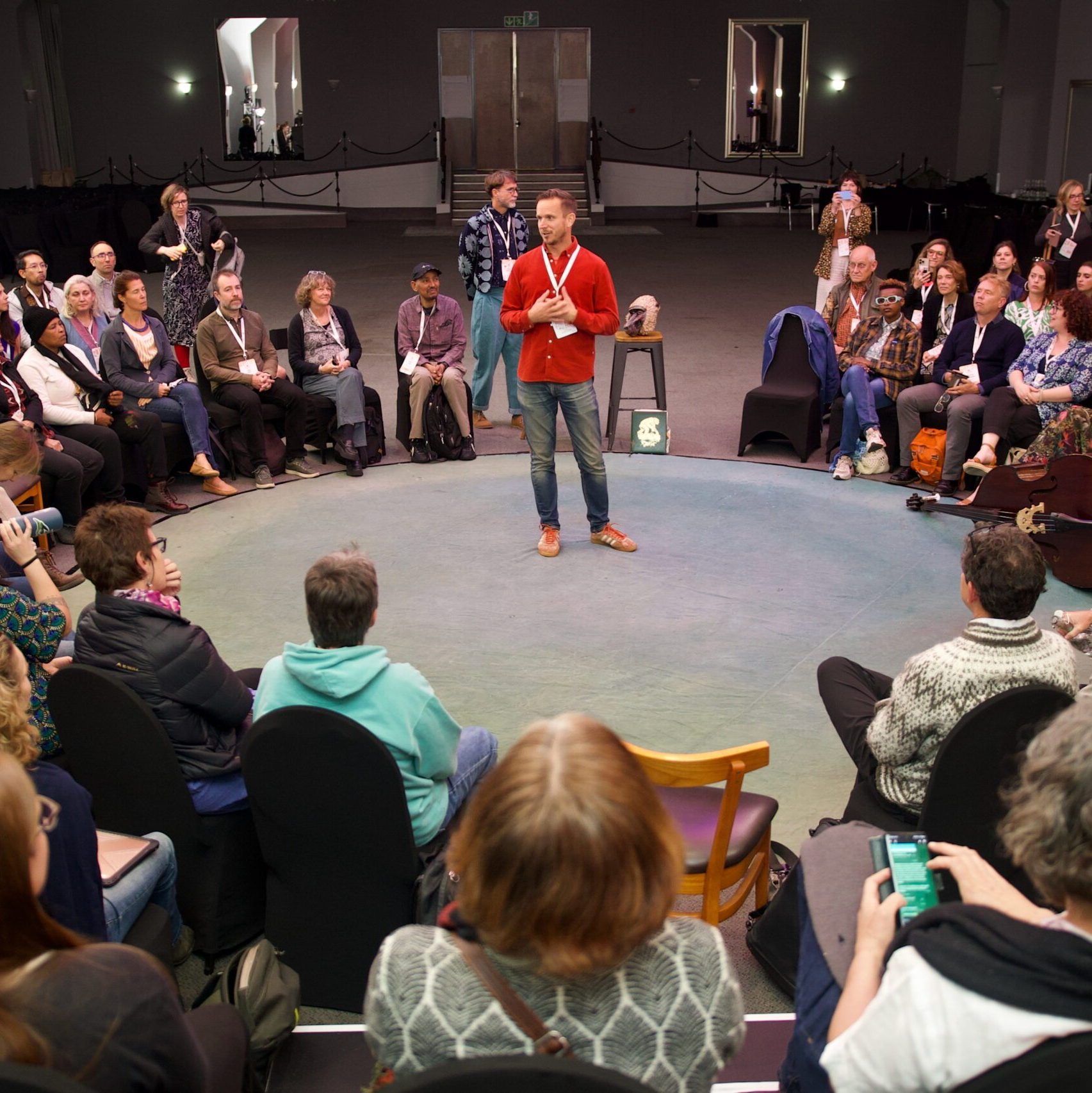
Johannesburg, 18-21 August
Both Kinga, Johan and the entire Empatheatre team attended the international scientific conference TC/ESG25, hosted by the Transformations Community, Earth System Governance Project, and University of Witwatersrand. The by far most impactful contribution was two live performances of Unruly, which became the most talked-about event of the conference and led to many inspiring meetings and new connections. Kinga moderated a panel discussion about frontiers of research methods, where one of Empatheatre’s co-founders, Dylan McGarry, shared his reflections about power of creative methods and their role in redefining academic rigour and democratising research processes. Meanwhile, Johan presented the team’s recent article about how theatre can help stimulate sustainability transformations, and was invited to contribute to a pre-conference workshop on how imagination and anticipation can be leveraged in governance of social–ecologcial systems.
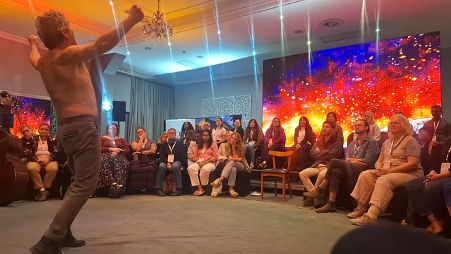
Stockholm, 9-10 September
While spending some time at Stockholm University, Johan organised a panel at the Stockholm Resilience Centre (SRC) with representatives from the research themes Conflict and Collaboration, Doing Sustainability, and SRC’s Arts and Science group. The seminar was well-attended and sparked interesting discussions about how science can create inclusive spaces for public deliberations, what the arts can do beyond communicating findings, and how researchers can balance the need for scientific rigour while also engaging with subjective realities of lived experiences. The following night, a filmed version of Unruly was screened for the first time at a fully booked local cinema in Stockholm, attended by both the leadership of SRC and its visiting International Science Advisory Council. The film version of the play worked remarkably well, even though audiences knew very little about the Cape Town context.
Knysna, 30 Sept-2 Oct

Kinga attended the 7th annual Garden Route Interface and Networking (GRIN) meeting, hosted by SANParks, SAPECS, CNRS, and Nelson Mandela University. GRIN has become an important meeting place for academics and practitioners to network and exchange innovative ideas. Kinga presented some of the work from her ongoing PhD, exploring how different ways of relating to baboons—each with unique emotional and perceptual dimensions—can inform baboon management.
Rather than viewing these diverse perspectives as obstacles to management, she proposed they be recognized as meaningful data that can help navigating contested landscape of baboon governance. The presentation landed well with the interdisciplinary audience and sparking valuable conversations about inclusive decision-making approaches. This was Kinga’s second time attending GRIN, which continues to be a wonderful source of inspiration and connection.
Helsinki, 9 October
Following the success of Unruly in Johannesburg and Stockholm, Johan was invited by global research think tank Demos Helsinki to present Unruly Natures’ research and do another screening of the play at their premises in the Finnish capital. The event was attended by a wide range of scholars researching sustainability, theatre, and democratic innovations, and sparked lively discussions about whether something similar could be used to unpack the thorny topic of wolves.
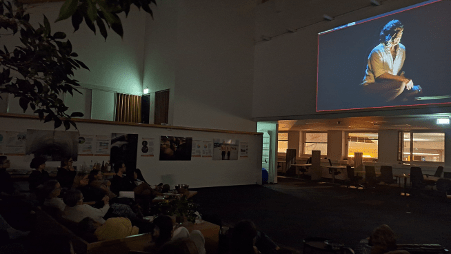
Muizenberg, 15 October
Finally, as advertised here recently, we premiered the research film Unruly Nature Fieldnotes at the Commons in Muizenberg. This was hosted by Kinga and Johan together with filmmaker and creative producer Odendaal Esterhuyse, who has been following the team even since before the project formally started. The film focuses on the research process, explaining the motivation for and goals of the project, and what methods we have used to do the research. The event brought together diverse audience who filled the venue to the rim and engaged in the post-screening discussion with curiosity and respect.
The research film is now available on our Outputs page along with four shorter versions that focus on the urban wildlife problem, the project and its aims, the survey we conducted, and the collaboration with Empatheatre to create Unruly.
***
PS. Lastly, our recent paper about using theatre in research about conservation conflicts has been highlighted by the Ecological Society of America, as part of a set of “illuminating and impactful studies” that foster innovation and advance ecological knowledge.
 Unruly Natures Project