Who are we, and why are we interested?
The core research team running Unruly Natures is Johan Enqvist, Kinga Psiuk, and Luke Metelerkamp. We share training as researchers in sustainability science, which is an interdisciplinary field that draws on both social science and natural science theory and methods. Importantly, we also bring individual interests, experiences and training from different fields, that all strengthen important components of the project.
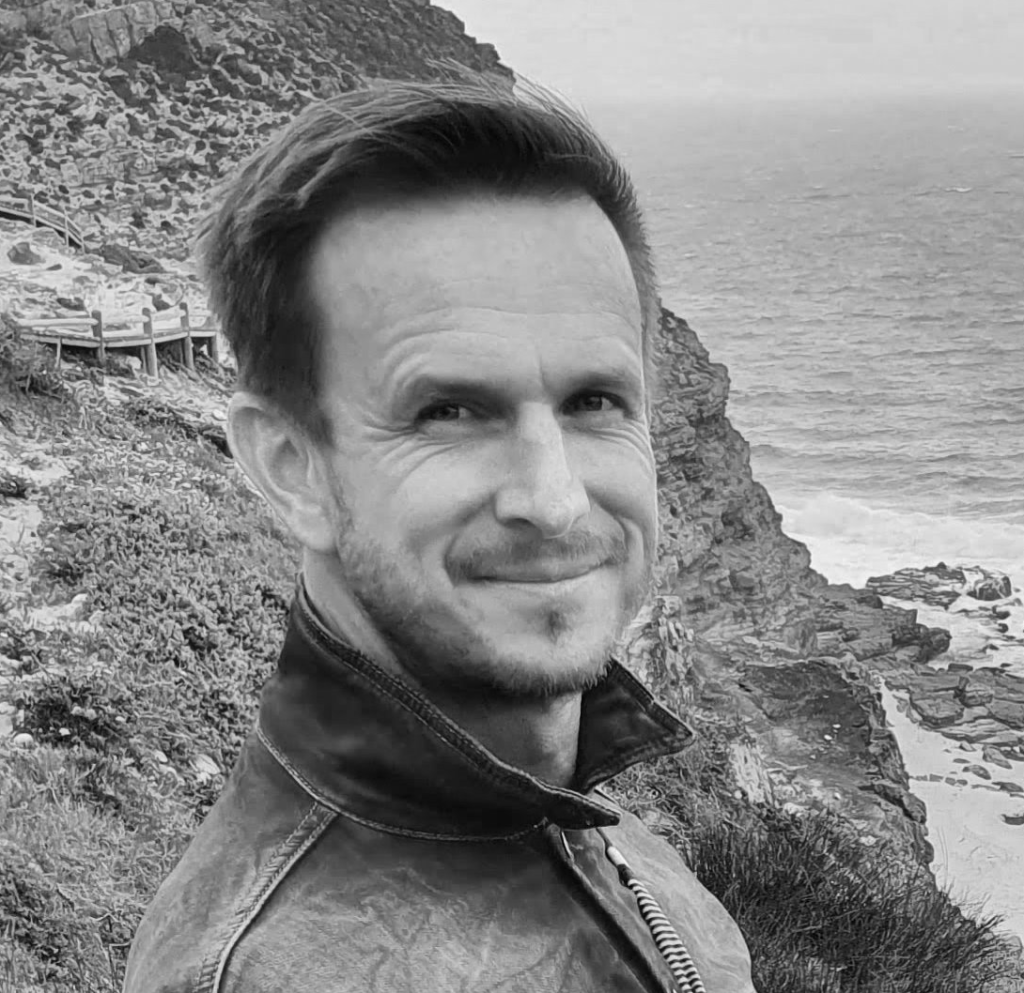
I’ve always been curious about how people in cities relate to nature. What makes them care about it, what kind of urban nature do they want, and what happens when it doesn’t meet those expectations?
Johan Enqvist (PhD)
Johan is the Project Leader and a researcher at Stockholm Resilience Centre, Stockholm University. He has over a decade’s experience studying civic engagement around urban green spaces and natural resources. He lives in Cape Town since January 2018, and has previously worked with the African Climate & Development Initiative at University of Cape Town to understand how the 2015-2018 drought affected people’s awareness of, and actions to conserve water resources.
Johan has combined qualitative and quantitative methods to understand people’s values, perceptions and actions in Indian, American and South African cities. This is increasingly done in collaboration with local stakeholders, to draw on both academic and other forms of knowledge and expertise, and make it accessible beyond academia.
Email: johan.enqvist@su.se
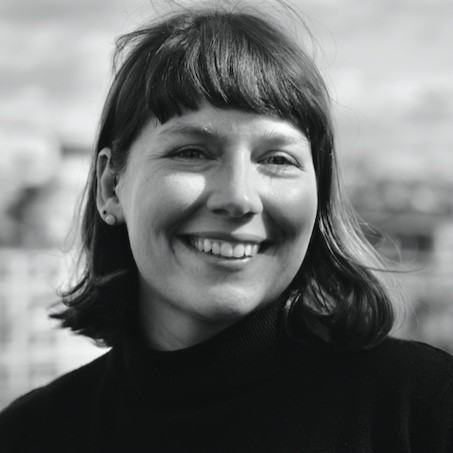
People’s experiences are complex and dynamic. They shape our values and the way we interact with the world. I want to explore how these complexities can be turned into productive collaborations.
Kinga Psiuk (MSc)
Kinga is a Junior Researcher and since Jan-2024 a PhD Candidate at the Centre for Sustainability Transitions, Stellenbosch University. She has a background in social psychology and sustainability science, which together led her to the topic of human-nature relations. Since 2021 she has been exploring subjective perceptions of residents from baboon-visited areas in Cape Town. Her PhD will continue doing so, paying special attention to social dynamics and the ways people relate to baboons. Her aim is to translate research into processes that can support communities and baboon management.
Kinga has experience with qualitative and quantitative methods. She values participatory approaches that allows to build a rapport and partnership with local communities.
Email: kingapsiuk@sun.ac.za
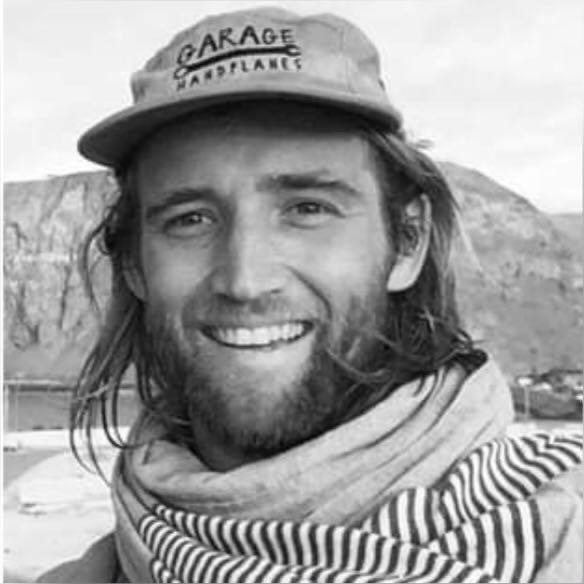
Stories shape our lived relationships, both by bringing us together, and pulling us apart. I’m really interested in how we, as citizens of a rapidly expanding African city, re-story our relationship with the rich diversity of life we share it with.
Luke Metelerkamp (PhD)
Luke is a Research Associate at the Centre for Sustainability Transition and extraordinary lecturer within the School of Public Leadership at Stellenbosch University. His research explores youth employment, skills development and food system reform. Having lived in the Cape region most of his life, and as a small-scale farmer and board member of the Cape Winelands Biosphere Reserve, he is keenly familiar with many long-standing challenges of human-wildlife interactions.
Luke has twelve years’ experience using arts-based and immersive learning methodologies to social processes, and facilitating multi-stakeholder dialogues in Southern Africa and South Asia. He has worked extensively with narrative-based methods and collaborated with non-academic partners in research processes.
Email: lmetelerkamp@gmail.com
This team brings together scholarship on civic engagement, immersive learning, and social psychology, to contribute to sustainability science theories about human-nature relations and environmental stewardship. More concretely, we draw on each member’s experience with participatory approaches and bringing forth community voices in knowledge production, with the hope that residents around the Cape Peninsula will share their experiences and learn from those of their neighbours. To this end, we also work closely with residents from different communities recruited to an Advisory Board.
Empatheatre partners
An incredibly important part of this project is a result of our partnership with Empatheatre to create the play Unruly. Thanks to our research funding we were able to tour it across the Cape Peninsula twice in 2024, offering it for free to all audiences including high school students, baboon rangers, and representatives from authorities, and other key stakeholders. We were also proud to bring Unruly to Johannesburg and the international scientific conference TC/ESG25 in August 2025, where it became one of the most appreciated contributions. You can read more about how the play forms part of our research in this publication.
Empatheatre was founded by Neil Coppen, Mpume Mthombeni and Dylan McGarry in 2014. It is a South African company and methodology that has been heralded for its unique approach, which forges creative responses to complex social concerns while uniting a range of stakeholders including policy-makers, citizens, community based performers, storytellers, artists, musicians, activists, human-rights lawyers and academics. Empatheatre has launched several ground-breaking research-based theatre projects over the last decade, including Soil & Ash (focusing on rural communities facing pressure from coal-mining companies), Ulwembu (street-level Drug addiction and harm reduction advocacy), The Last Country (female migration stories), Boxes (homelessness and urban land justice inequalities in the city of Cape Town) and Lalela ulwandle (an international project supporting sustainable transformative governance of our oceans) and Umkhosi Wenala (Creating a new public dialogue and archive, incorporating traditional knowledge and cultural perspectives into spatial planning decisions). In addition to the tours as part of the Unruly Natures research, Unruly also ran for three weeks at the Baxter Theatre Studio in 2025, where many of the shows were sold out. It was nominated for three awards at the 2025 Fleur du Cap, including Best production, Best performance by a lead actor, and Best live music performance.
Residents’ Advisory Board
Because the project seeks to create a safe way for people to share their personal views and experiences in a neutral space, we are enlisting the help of residents in different baboon-visited areas across the peninsula. These residents were recruited via nominations from local residents’, ratepayers’, and homeowners’ organisations, ward councillors, various interest groups, and residents themselves. Together they form an Advisory Board to the project, something that is quite unusual in conventional research projects.
The purpose of the Board is to help ensure that the project is successful, relevant to the needs specific to different neighbourhoods, and conscious of pre-existing challenges and existing local initiatives to address them. Board members will meet with the research team about twice a year to discuss the project, complement the researchers’ academic expertise with their local knowledge, and help focus the research – and challenge it, when necessary! It should be noted that members do not formally represent any other organisations, they sit on the board merely as residents living in different baboon-visited areas. Below are the current board members, listed alphabetically, and the neighbourhoods the reside in:
Caroline Brown
Zwaanswyk
Gordon Chunnett Constantia
Ben Cousins
Simon’s Town
Sandie MacDonald
Welcome Glen
Hardy Maritz
Capri
Jason Stoffels
Ocean View
Nicky Schmidt
Tokai
Anso Thom
Murdock Valley
Misha Wilderman
Da Gama Park
So far the research team and advisory board has met in 2023 on 11 January, 13 April and 30 November, and in 2024 on 10 June.
Advisory Board Commitment of Conduct
Version 2023-04-12
Unruly Natures is a research project that studies people’s experiences of and attitudes towards baboons on the Cape Peninsula. The aim is not to come up with solutions to management challenges, but to produce knowledge that can help other stakeholders understand each other’s perspective and make more informed decisions. The project is run by a team of academic researchers, guided by input from an Advisory Board made up of residents from different baboon-visited neighbourhoods. This document describes the guiding principles of this collaboration.
We, the Researchers and Board Members, commit to conducting our work in an ethical and respectful manner. The values guiding the project are openness, respect, integrity, fairness, transparency, and care.
We commit to:
- Listening to and respecting the perspectives and experiences of one another.
- Treating each other with dignity and respect, regardless of any differences.
- Helping each other ensure that each person has the opportunity to share their views, that their voice is considered when making decisions.
- Ensuring that we work openly and transparently with each other, and try to make the research project itself as transparent as possible towards the public.
- Ensuring that all decisions are made in the best interests of the research project, and not with any individual personal agendas in mind.
- Maintaining professional and courteous conduct in our work together.
- Working to ensure the research project is completed in a timely and effective manner, with outcomes that benefit the communities on the Cape Peninsula.
 Unruly Natures Project